We’ll see you again in Cuba Tourism Convention 2004
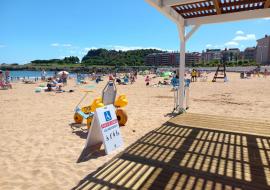
“We’ll see you again in 2004,” were the words that pulled down the curtain of the 2003 Cuba Tourism Convention held in Varadero, a beach circuit some 96 miles east of Havana where the island nation proved to be a privileged destination in the Caribbean.
The weeklong convention allowed those linked to the marketing of the Cuban tourist product to know firsthand the island’s offers in search of wider diversification both in Cuba and in other markets overseas. Under a slogan reading Cuba: A Compelling Destination, the island nation put all its trump cards on the table. These were the convention’s highlights:
> The Excellences Group had a hands-on participation in Cuba’s Tourism Convention. The company presented the Holguin Travel Guidebook in six languages with the most complete blueprint of the province of Holguin in eastern Cuba, as well as the 44th issue of the well-known Caribbean Tourist Excellences magazine, dealing with the tourist realm both in Cuban and overseas.
> The first presentation of the 23rd Tourism Convention now underway in Varadero’s Plaza America Conference Center dealt with Holguin, a region teeming with highlands, fertile plains and beaches of powder-thin sand, the same place that inspired Genoa-born Admiral Christopher Columbus to dub it the most beautiful land human eyes had ever beheld.
During the presentation of the destination, local tourist authorities highlighted the potentials of a circuit that embraces nearly 1,200 rooms run by hotel group Cubanacan in Guardalavaca Beach, 776 accommodations in Esmeralda owned by Gaviota and as many as 1,733 rooms in Playa Pesquero.
> Conrado Martinez Corona, chairman of Cuba’s Convention Bureau, talked to Caribbean News on the presentation of the Cuban destination for incentive travel and events at a time when the island nation advocates for a healthy, peaceful and safe tourism.
> Cuba showed satisfaction over the good faring of its high-peak tourist season that brought in some 770,000 visitors to the island nation’s beaches, urban hotels and nature destinations regardless of an unfavorable and a tight-rope international situation. Cuba’s tourism vice minister Marta Maiz Gomez said “this has been a good season” with 19 percent more arrivals than in 2002 and 2 percent more than in 2001, by far the best year up to now.
> Beginning May 15, Spain-based company Occidental Hotels will run Cubanacan-owned Miramar Hotel in Havana that up to now was in the hands of Accor, a French chain. From that date on, Mr. Guillermo Guerra will be at the helm of the lodging facility’s front office. Horizontes Hotels has officially opened the Palma Real Hotel, a 466-room four-star facility leased to Spanish group Hotetur. Horizontes’ marketing director Maria del Carmen Orellana told Caribbean News that over 70 percent of the chain’s rooms has undergone an all-out refurbishment, and this is definitely putting the Cuban group back in the market’s top tier.
> Cuba closed the first quarter of the ongoing year as the number-one Caribbean destination among Canadian, Italian and Spanish tourists, and finished a hefty runner-up for German travelers, two positions that make clear the island nation’s coming of age as far as tourism is concerned. Cuba’s tourism vice minister Marta Maiz said the country continues to go strong and achieving integrality. “(The country) is thoroughly redesigning the concept of the sun-and-beach product because Cuba is a place teeming with culture, history, nature and other attractions that diversify that product and take it up one peg higher.”
During the first quarter of 2003, “we chalked up a 20 percent growth in the number of incoming visitors. Nearly 80 percent of travelers came from the seven top sending markets: Canada, Italy, France, Germany, Spain, the United Kingdom and Mexico,” Mrs. Maiz added.
> All of Cuba’s potentials as a destination for nature tourists were disclosed in a master lecture dictated by Eduardo Rios, head of the Development Division of Cuba’s Ministry of Tourism. Speaking to an audience of tour operators, travel agents, tourism professionals and attendants to the 2003 Tourism Convention in Varadero, Mr. Rios explained the Cuban development plan relies heavily on the sun-and-beach segment, without ruling out the possibilities of nature tourism the island nation has to offer.
> Air France has just set up shop in Varadero. The goal of the French airline’s new office in the largest tourist circuit of the island nation is to provide service to tour operators and ease plane ticket sales. Air France has been flying to Cuba for over twenty years with four weekly flights landing in and taking off from Havana’s international airport.
> Execs from Cubanco S.A. who attended the 2003 Tourism Convention, announced new arrangements for cruise operations in Cuba during the 2004-2005 winter season and British company Air Tours’ intention to settle down in Havana. In a special presentation during the marketplace, officials from that joint venture made sure Cuba is right now providing cruise service up to par with the one rendered in European ports.
As to the 2004-2005 winter season, Caribbean News has learned that Air Tours will put one of those new-generation ships in Havana and will additionally provide four Boeing-747 aircraft every week to take cruise passengers to the island nation.
> A 371-seat 330-200 Airbus will this month join Cubana de Aviacion’s fleet to connect Havana with the cities of Madrid, London and Paris. Cubana de Aviacion president Francisco Valdivia told attendants at the Tourism Convention in Varadero that his company will start operating from Paris’s Charles de Gaulle Airport beginning in May. The presence of the island nation’s carrier in that European capital will ease Cuba-bound flights from other French burgs and the rest of Europe. As a result of a leasing agreement signed with Blue Panorama Airline, the Havana-Rome route will be flown by a Boeing-767 aircraft.
> Marketing director of Sol Meliá Gabriel Garcia walked in the Plenary Hall of the Plaza America Conference Center to present the Sol Meliá product. At the onset of his presentation, Mr. Garcia went through all the hits his company has scored since it began operating in Cuba and praised convention planners for drawing a bead on the tourist circuit of Holguin and incentive travel.
On the other hand, Mr. Garcia fingered Cuba as the nation with the largest number of Paradisus-style hotels as he touched on their architectural values, natural environment, comfort, top-notch service and other features of the Paradisus Varadero and Paradisus Meliá Rio de Oro are blessed with. Referring to the latter, he talked about the opening of 50 new grand deluxe cabanas plus the addition of a spa and a new royal service in December to mark the resort’s fifth anniversary.
> Within the framework of the 23rd Tourism Convention, Cuba’s vice minister of Culture Ruben del Valle unveiled the island’s cultural product before an audience that included such outstanding Cuban intellectuals as songwriter Chucho Valdes, Miguel Barnet, Jose Loyola –deputy chairman of Cuba’s National Writers and Artists League (UNEAC), Jesus Ortega, founder of the Cuban Guitar School, painters Choco and Manuel, and writer Waldo Leyva, among others.
> Aruba’s minister of tourism and transportation, Edison Briesen, took a grand tour around the venue hosting the Tourism Convention and talked to authorities from the sector.
In a conversation with Caribbean News, Mr. Briesen pointed out his country is keen to developing multi-destination among Caribbean countries. In that respect, he said air connection is one of the needs to be ironed out since many nations in the region have no flights among themselves.
Mr. Briesen praised the recently opened Caracas-Aruba-Havana flight –in operation since May day by Venezuelan carrier Aeropostal- as a significant step forward in that direction.
Mr. Briesen announced his country will have a special presentation next May 15 at Havana’s National Hotel in an effort to showcase all tourist potentials and multi-destination travel choices the lovely Caribbean destination has to offer.
> With a view to advertise the upcoming World Tourism Expo, Wendy Hesketh is attending the Tourism Convention. Mrs. Hesketh is the planner of the aforesaid exhibit scheduled to take place next September in Mexico. In a brief interview with Caribbean News, Mrs. Hesketh said the idea behind this effort is to lure international purchasers and boost up the Central American, Caribbean and Mexican regions as highly attractive tourist destinations.
> Cuban air carriers Cubana de Aviacion and Aerocaribbean S.A. signed a shared code contract that from now on will allow both airlines to divvy up both transportation and service. The agreement, rubricated by Eng. Ramon Valdivia Acosta from Cubana de Aviacion and Alberto Velasques Sanchez from Aerocaribbean S.A., will be in force beginning in June.
> Havanatur’s president Berto Perez talked about a new contract that would not only permit to enhance the mesh of services, but also to give the Cuban destination’s choices a much wider media hype.
In this year’s convention, Havanatur unveiled the opening of a brand-new assistance checkpoint in the province of Matanzas and the reopening of the Rancho Luna restaurant in the province of Cienfuegos after an all-out refurbishment. Havanatur has just uploaded its own Internet portal (www.havanatur.cu).
> Latin America and the Caribbean were represented by twenty nations, including the host country, while ministers and high-ranking officials from Aruba, Guatemala, Turkey, the United States and Mexico are also taking part in the event.
The convention will stretch out until Friday only to resume on Saturday in Havana with an event on tourist promotion, an opportunity that many here eye as the right framework for cutting deals over negotiations that had started the year before, for the presentation of new-fangled products and for lots of other activities to foster expert-to-expert exchanges.
> Around 73 percent of hotel rooms in this tourist destination are pigeonholed in the four-star and five-star categories. As a whole, the circuit is growing at a 19 percent average annual rate.
More recently, Holguin has been the destination of choice among Spanish, Canadian, German and British travelers. However, the Canadian and Spanish markets comprise 48 and 26 percent respectively of the total number of vacationers.
According to authorities from the sector, ecological and nature tourism provide the perfect setting for the enjoyment of natural ambiances, as well as the history and culture of a city that features such major sightseeing spots as Bariay, the location where Columbus landed on in 1492. Other interesting sites are Chorro de Maita, Banes –penciled in as Cuba’s archeological capital- and the town of Holguin.
“For the first time, the primary sense of a tourism convention will revolve on the issue of incentive travel, congress and conventions. This is something that no doubt embraces great significance for the Convention Bureau that turned twenty years old just a few days ago. Cuba has a huge experience and expertise under its belt as far as planning events is concerned, not only because of the professional way it handles things, its infrastructure and the cultural and technical foundations it has built, but also because it can serve as a host to an event that usually goes around from one country to another, and it could very well fall on the island nation.
> The Convention –with a projected turnout of a thousand attendants, 900 of them from as many as 60 countries- is taking place at the Plaza America Conference Center in Varadero, a beach paradise some 87 miles east of Havana. The conclave’s objective is the unveiling of Cuba’s new tourist products to the eyes of tour operators, travel agents, airline execs and journalists, with a marked interest in highlighting the island nation’s potentials in events, incentives, nature, ecological tourism and culture.
> Cuban high-ranking officials said added the island’s tourist destinations posting the highest growth figures are Havana, Varadero, Jardines del Rey (in the northern keys off the province of Ciego de Avila) and Holguin in northeastern Cuba. Last year, the Caribbean island was visited by 1,686,162 tourists, a figure somewhat shy of the 1.9 million visitors Cuba was aiming at, and 5 percent less than the year before, sources said. If official forecasts hold true, the 2003 projections will account for a 12.7 percent increase and will send average occupancy rates to 61.7 percent.
> The possibilities offered by Cuba as a tourist destination and the outcomes of its hospitality industry were highly extolled by Fernando Abreu, marketing associate director for the Caribbean Tourism Organization (CTO). In an exclusive interview with Caribbean News Digital during his visit to Cuba for the Tourism Convention, Mr. Abreu expressed admiration for the island nation’s varied offer fit to meet the demands of any tourist. “I travel to almost all destinations because of my job, but I must admit that Cuban hotels and the training of their personnel are way beyond everything I’ve seen in the region,” he said.
> “The diversification of Cuba’s tourist industry as far as offers, destinations, market segments and tour operators are concerned is a top priority for us,” said Cuban tourism minister Ibrahim Ferradaz. The island nation welcomed 800,000 sunbathers in the first third of the year for a 19 percent increase compared to the same period of time in 2002.
Canada is the top tourist-sending market followed by Italy, France, Great Britain and Mexico. Cuba’s goal right now is to reach out to other senders, a reason why authorities are working with tour operators from Scandinavian nations, Russia, China and northern Europe, plus other such nations as Lebanon and Qatar.
> Cuba won’t feel the pinch due to Washington’s toughening of the travel ban on U.S. citizens. Last year, some 80,000 Americans traveled to Cuba and only half that figure holding the permits licensed by the U.S. government for its citizens before coming to Cuba. One of the Cuban initiatives in the pipeline is the free circulation of the European currency in the destinations of Camaguey and Holguin beginning June 1.
> Following the grand opening of SPA Club La Casa Verde in Cienfuegos run by Cubanacan’s Health & Tourism Co., there are now three such resorts in Cuba keen to providing service to those interested in improving their health and physical welfare. There are development plans in the offing to open three more such resorts in the course of the ongoing year.
The facility’s first stage includes a gym equipped with state-of-the-art workout apparatuses, aerobics mats, treadmills, steppers and fixed bikes, plus audio and video means. The second stage in coming months would embrace mud-therapy, massage and outpatient appointments.
The editorial team of Caribbean News Digital was alspo in Varadero covering lectures and presentations of such brand-new hotels as Palma Real, Sandal Royal Hicacos Resort & Spa and the Club Tuxpan Varadero, among others. The online publication equally conducted extensive interviews and talked to Cuban and foreign professionals alike. For Caribbean News Digital the message is crystal-clear: In Cuba, tourism is by far the name of the game.
From this moment on, the convention will go on to make headlines and we’ll be here to keep you posted on the latest developments in Cuba’s leisure industry and its determination to provide a peaceful, healthy and safe kind of tourism.