U.S. Reconsidering Airline Security Screening
US authorities will reconsider airline passenger screening procedures that have caused a public uproar on the eve of the busy holiday travel season, the top transport security official said last week.
“We’re going to look at how can we do the most effective screening in the least invasive way knowing that there’s always a trade-off between security and privacy,” Transportation Security Administrator John Pistole told NBC’s ‘Today’ show.
“What I’m doing is going back and looking at, are there less invasive ways of doing the same type of screening?” he said on ABC’s ‘Good Morning America.’
Coming amid public and political pressure, Pistole’s comments appeared to row back from a Sunday interview in which he said there were no plans to scale back procedures that travelers have criticized as invasive and a violation of privacy rights.
But while making the rounds on US morning television shows, he also cautioned against expectations for immediate change and defended the effectiveness of current methods. “In the short-term, there will not be any changes,” Pistole said on CNN.
The screening methods that have irked passengers and Congress rely on highly revealing full-body imaging scanners and physical pat-downs for travelers who choose to opt out of the scans.
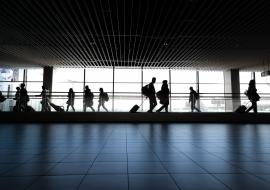
Airlines expect 24 million people to travel over the Thanksgiving holiday period. Airlines say they have passed along passenger concerns to the TSA.
After saying “No, we’re not changing the policies” in a Sunday television interview, Pistole issued a statement hours later saying the TSA was constantly evaluating ways to adjust its screening methods.
Pistole said that security officials would consult government investigators who penetrated the TSA’s previous screening cordon to determine how methods might change and still protect against a passenger who poses a security threat.
Pistole said he himself has undergone both the scans and the patdowns and defended both.
“I felt that it was thorough,” he said of the patdown. “I felt it was doing exactly what it’s designed to do -- to try to detect somebody who’s trying to kill hundreds of people on an airplane, “ he told MSNBC.
TSA estimates that fewer than 2 percent of the 2 million passengers screened daily, or 40,000, are given the patdowns.
With pilots allowed to carry guns and cockpits hardened against hijacking threats after the 2001 hijack attacks on New York and Washington, screening in recent years has focused on sophisticated explosives that are hard to detect.