Aviation Industry Counts Losses as Ash-Fueled Crisis Winds Down


Airlines toted up losses topping $2 billion and struggled to get hundreds of thousands of travelers back home Wednesday after a week of crippled air travel, as questions and recriminations erupted over Europe’s chaotic response to the volcanic ash cloud.
Civil aviation authorities defended their decisions to ground fleets and close the skies — and later to reopen them — against heated charges by airline chiefs that the decisions were based on flawed data or unsubstantiated fears.
The aviation crisis sparked by a volcanic eruption in Iceland left millions in flightless limbo, created debilitating losses for airlines and other industries and even threatened Europe’s economic recovery. An aviation group called the financial fallout worse than the three-day worldwide shutdown after the 2001 terrorist attacks in the United States.
It was a lesson in mankind’s dependency on air travel, the vulnerability of a vital industry, and the confusion that can ensue when each nation decides for itself how to handle a problem that crosses borders.
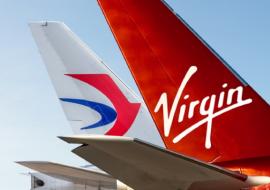
Virgin Group founder and chairman Sir Richard Branson, like other airline executives, was forced to deal with the logistical and economic problems created by the volcanic ash. He told BBC World News America that if governments are faced with a similar situation in the future they will likely deal with the problem differently.
“I think if they’d sent up planes immediately to see whether the ash was actually too dangerous to fly through or to look for corridors where it wasn’t very thick I think that we would have been back flying a lot sooner,” he said.
The air space over most of Europe opened Wednesday after the vast, invisible ash-laden cloud dispersed to levels deemed safe. Restrictions remained over parts of Britain, Ireland, France and the Scandinavian countries.
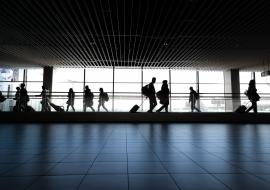
Electronic boards in Europe’s biggest hubs — London’s Heathrow, Paris’ Charles de Gaulle and Germany’s airport at Frankfurt — showed about 80 percent of flights on schedule as airlines began filling vacant seats with those who had been stranded for days. But with 102,000 flights scrapped worldwide over the last week, it could take over a week to get everyone home.
In Iceland, the volcano under the Eyjafjallajokull remained active Wednesday — throwing magma chunks the size of cars into the air, bubbling lava and producing tremors. But it was not shooting ash and smoke four to six miles (6 to 10 kilometers) into the air like it did previously.
British Airways raised the stakes in its showdown with aviation authorities Tuesday by announcing it had more than 20 long-haul planes in the air and wanted to land them in London. Despite being told the air space was firmly shut, radar tracking sites showed several BA planes circling in holding patterns over England late Tuesday before the somewhat surprising announcement that air space was to be reopened.
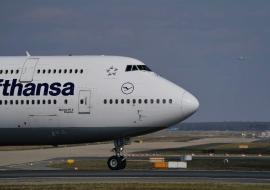
Lufthansa demanded and received a waiver from German authorities that allowed them to bring 15,000 passengers back to Germany on Tuesday, flying at low altitude. Other Germany-based airlines also received waivers, for a total of 800 flights, even though German airspace was not officially opened until Wednesday.
In Berlin, Giovanni Bisignani, the head of the International Air Transport Association, called the economic fallout “devastating” and urged European governments to compensate airlines for lost revenues like the U.S. government did following the 9/11 terror attacks.