Airbnb Begins Offering Accommodations in Cuba
Home-rental service Airbnb Inc. said Thursday it began offering accommodations to licensed U.S. travelers in Cuba, becoming the latest U.S. business to tap opportunities made possible by thawing U.S.-Cuba relations.
Since both countries announced their détente in December, U.S. firms—many in the technology and telecommunications sectors—have been evaluating new business prospects as the struggling Communist island looks to boost its economy and attract foreign investment.
“Airbnb expects significant demand for Cuban accommodations from the U.S.,” the company said in a statement, adding that it has seen a 70% rise in searches from the U.S. for listings in Cuba since the governments began rapprochement. This year, more Americans have searched for Cuba than other Latin American hot spots like Rio de Janeiro, Mexico City and Buenos Aires, Airbnb said.
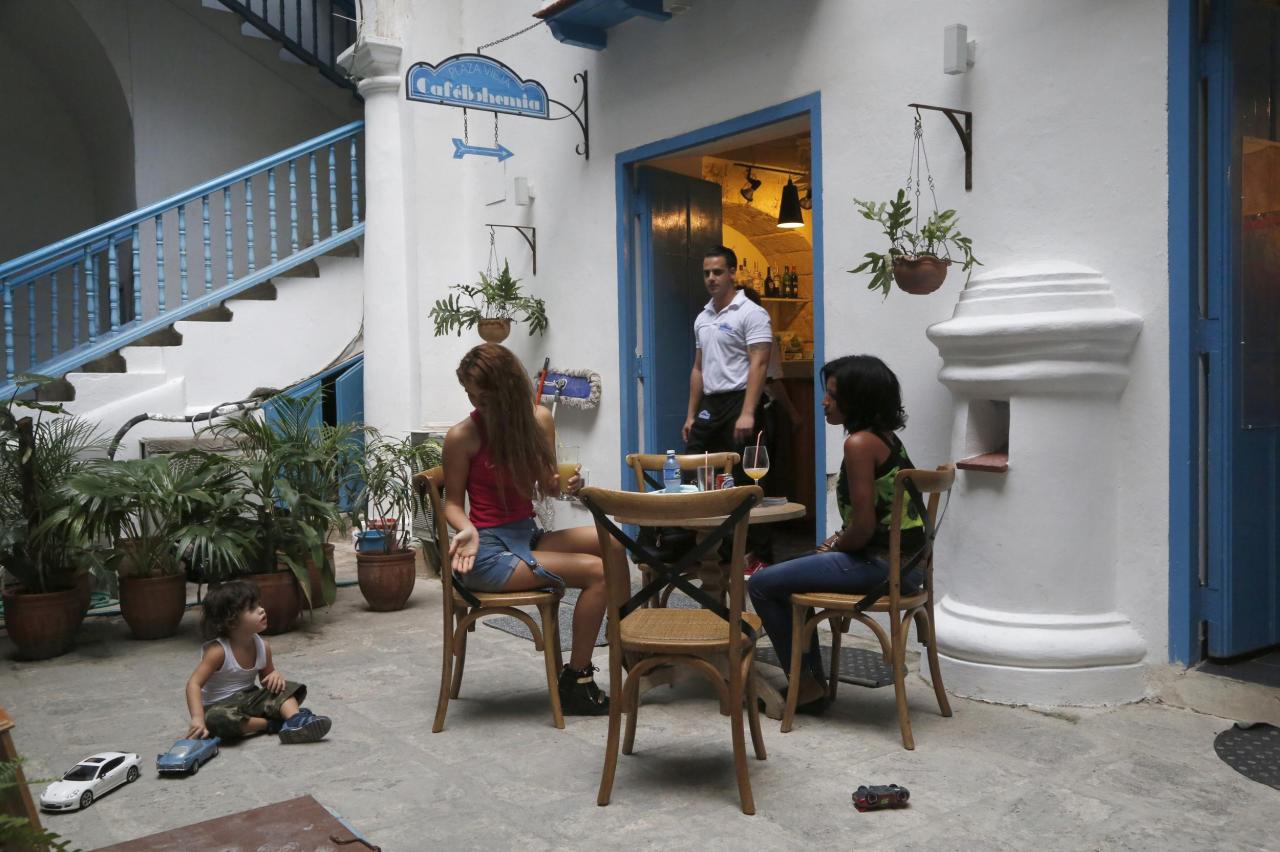
The San Francisco-based rental marketplace will make use of Cuba’s wide network of casas particulares—private guesthouses in homes that are made available to foreign tourists.
The guesthouses were among the island’s first experiments with private business in decades and have become a popular low-budget option, offering lodging for as little as $30 a night.
They were made possible by subtle reforms introduced by President Raúl Castro in 2010 that also allowed Cubans to open small restaurants in their houses, measures aimed at helping the country capitalize on the vital tourism trade.
More than 1,000 guesthouse operators have listed with Airbnb, around 40% of which are located in the capital, Havana, the company said. The move could expand the offering of lodging alternatives in a country with a limited number of hotel rooms, a significant hurdle affecting Cuba’s tourism industry.
In opening services in Cuba, Airbnb joins other U.S. companies like Netflix Inc., which in February made movie-streaming available on the island, and New Jersey-based IDT Corp., which in March became the first U.S. phone company to allow direct calls between the countries in decades.
The companies are looking to take advantage of the Obama administration’s move to relax some travel restrictions to Cuba, increase limits on remittances and allow U.S. credit cards to be used on the island.
In recent months, U.S. and Cuban officials have held numerous talks over restoring diplomatic relations and allowing U.S. technology firms to operate in the Caribbean country.
Telecommunications have played a central role in the discussions as Cuba looks to increase Internet access in one of the region’s least-wired countries, U.S. officials say. Only about a quarter of Cubans use the Internet, according to government statistics, due to few access points and service that is too costly for the residents.
“While some hosts have limited Internet access, others are working with hosting partners to help them manage their online requests and bookings,” Airbnb said.
So far, the company only has authorization to work with licensed U.S. travelers but plans to seek permission to facilitate accommodations for non-U.S. travelers as well, it said.
Source: The Wall Street Journal